Where can you find a guide who speaks fluent English and understands the architectural history of the temples in Mathura Vrindavan?
By Yash Shrivastav · 7 Mar 2026
Quick Enquiry
There is a moment many travellers experience in Mathura or Vrindavan that no one really talks about. You are standing inside a centuries-old temple, looking at carved pillars, old stone walls, maybe a small courtyard where devotees are quietly walking in circles… and you suddenly realise something. You’re looking at history, but you don’t fully understand what you’re seeing.
A priest may be chanting nearby, people are moving in and out for darshan, and the atmosphere is deeply spiritual. But questions quietly start forming in your mind. Why is this temple designed like this? Why are some temples red sandstone while others look almost medieval? And why does every temple feel slightly different from the next one?
This is usually the moment travellers begin searching for a Guide for Mathura Vrindavan who can explain things clearly, calmly, and in fluent English. Not someone who simply points to places and moves on, but someone who understands the architectural story hidden in these temples.
Because here in Braj Bhoomi, temples are not just places of worship. They are chapters of history carved into stone.
Why a knowledgeable guide changes the entire temple experience
Most visitors arrive in Mathura or Vrindavan with a simple plan. Visit the famous temples, attend aarti, maybe explore the ghats, and return with memories. But temples here are not isolated monuments like museums. They are living places with traditions, stories, and architectural styles that developed across centuries.
For example, take a walk through Vrindavan and you will quickly notice something unusual. Some temples look like royal forts built from red sandstone. Others have delicate carvings and smaller sanctums. A few are surprisingly simple but deeply revered.
Without explanation, it can feel confusing.
But when you walk with a good Guide for Mathura Vrindavan, small details suddenly begin to make sense.
A carved arch might belong to Mughal-era temple design. A high platform may have been built for protection during historical invasions. A temple courtyard might follow a traditional Braj layout meant for kirtan gatherings.
Once someone explains these details, the temples stop feeling like separate stops on a checklist. They begin to connect like pieces of a larger story.
What makes a good Mathura Vrindavan travel guide different
Many people assume any local guide can explain temples. In reality, the difference between an average guide and a knowledgeable Mathura Vrindavan travel guide becomes clear within the first few minutes of conversation.
A good guide does more than describe the obvious.
They explain why temples were built in certain locations
They understand the architectural style of each temple
They know historical periods linked to the temple construction
They speak clear English so international travellers understand easily
They respect temple traditions while guiding visitors
Another thing worth noticing is how they handle questions.
Sometimes travellers ask something unexpected. For example, someone might ask why the pillars in Govind Dev Temple look similar to Mughal architecture. A knowledgeable guide will not rush the answer. They will explain how the temple was built during a time when Mughal influence shaped many structures in North India.
That moment of explanation often becomes the highlight of the visit.
Understanding temple architecture in Mathura and Vrindavan
Now here’s something many visitors don’t realise before arriving. The temples of Mathura and Vrindavan were built across several centuries, under different rulers and spiritual movements. Naturally, the architecture reflects those changes.
When exploring places to visit in Mathura Vrindavan, a guide who understands architecture can explain patterns most travellers miss.
For example:
Govind Dev Temple
Built in the 16th century, this temple once had seven floors. Its massive red sandstone design shows clear influence from Mughal structural techniques. The arches and layout were revolutionary for temple architecture at that time.Madan Mohan Temple
One of the oldest temples in Vrindavan, known for its tall brick structure. Unlike grand sandstone temples, this one reflects a simpler yet deeply historic design connected to early Gaudiya Vaishnav traditions.Radha Raman Temple
Architecturally smaller but spiritually significant. The temple structure focuses more on intimate devotional space rather than grand scale.
But here’s the interesting part. When visitors explore these temples alone, they often remember the darshan but miss the historical layers behind the architecture.
A skilled Guide for Mathura Vrindavan connects those layers for you.
Suddenly the temples feel alive with context rather than just beautiful structures.
Why fluent English matters when choosing a guide
Many international visitors come to Mathura and Vrindavan every year. Even Indian travellers who are comfortable in English prefer a guide who can clearly explain things without switching constantly between languages.
Fluent communication matters for a simple reason. Temple architecture involves details. Dates, historical periods, spiritual movements, and cultural influences all play a role.
If the explanation is unclear, visitors miss the meaning behind the structure.
A guide who speaks fluent English can explain things naturally:
Why certain temples face specific directions
How Mughal and Rajput architecture influenced Braj temples
Why some temples were rebuilt multiple times
How devotional movements shaped temple construction
And sometimes the conversation becomes more interesting than expected.
Travellers ask questions. Guides share lesser-known stories. A temple visit slowly turns into a cultural conversation rather than a rushed sightseeing stop.
A simple Mathura Vrindavan temple visit itinerary with a guide
One of the practical benefits of hiring a knowledgeable guide is planning the temple route correctly. Mathura and Vrindavan have dozens of temples, but visiting them in random order can waste time and energy.
A well-planned Mathura Vrindavan temple visit itinerary helps visitors experience the region comfortably.
A typical guided temple route may look like this:
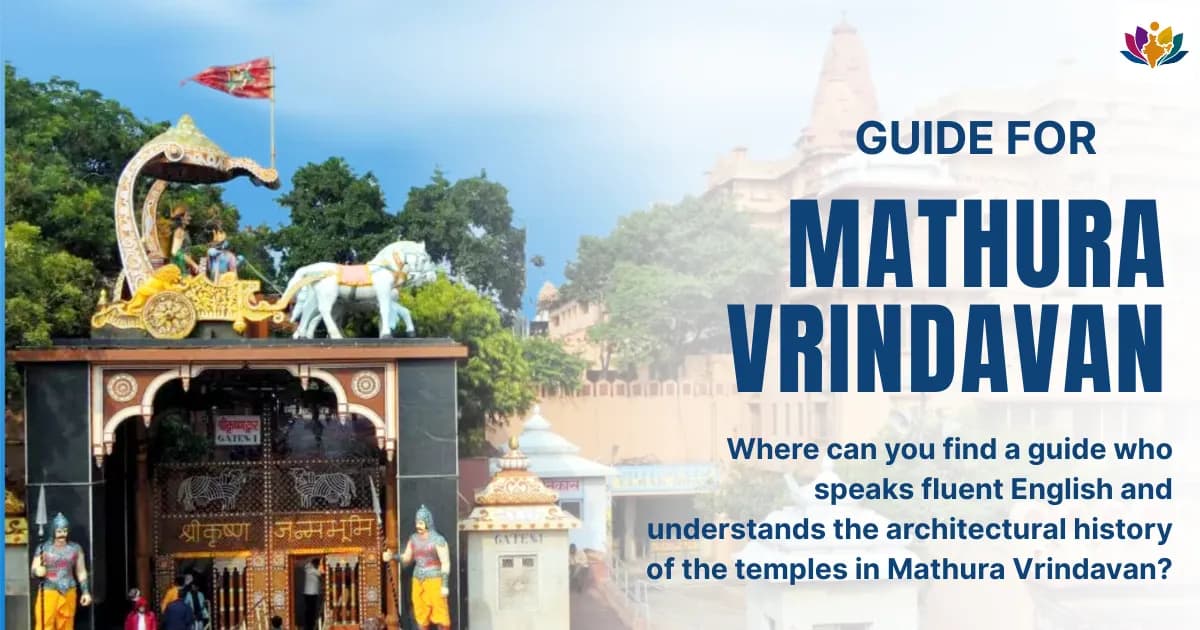
Shri Krishna Janmabhoomi Temple (Mathura)
This is believed to be the birthplace of Lord Krishna. The temple complex carries immense historical and spiritual importance.Dwarkadhish Temple (Mathura)
Famous for its vibrant architecture and devotional atmosphere. The temple courtyard becomes lively during festival seasons.Prem Mandir (Vrindavan)
A relatively modern temple known for its white marble carvings and evening lighting. Many visitors enjoy the evening visit here.Banke Bihari Temple (Vrindavan)
One of the most beloved temples of Vrindavan. The darshan style here is unique and often surprises first-time visitors.Govind Dev Temple (Vrindavan)
A remarkable architectural site that reflects the grandeur of historical temple construction in the region.
When a Guide for Mathura Vrindavan leads this journey, they also manage timing. For example, they know when temple doors close briefly or when crowds are highest.
Those small details save travellers a lot of frustration.
The advantage of exploring with Vrindavan Mathura Guide
Many travellers eventually realise that navigating temples, darshan timings, and historical context at the same time can feel overwhelming. This is where a service like Vrindavan Mathura Guide becomes helpful.
Instead of simply listing temples, the guide focuses on explaining the deeper story behind them.
Visitors often appreciate small things that are easy to overlook:
Clear explanation of temple architecture
Fluent communication with international travellers
Calm pacing instead of rushed temple visits
Understanding of local traditions and temple etiquette
Practical guidance during busy festival seasons
And honestly, this changes the experience more than people expect.
A temple visit becomes slower, more meaningful, and surprisingly educational.
Sometimes travellers even spend extra time asking questions about Braj history after the tour ends.
How to choose the right guide for Mathura Vrindavan
If you are planning a temple tour, it helps to look for a few qualities before selecting a Guide for Mathura Vrindavan.
A reliable guide usually demonstrates the following:
Comfortable communication in English
Real knowledge of temple architecture and history
Familiarity with temple darshan timings
Respect for religious traditions
Ability to explain stories without exaggeration
Another thing worth paying attention to is how the guide interacts with visitors.
A thoughtful guide allows time for observation. They don’t rush visitors through temples just to finish the itinerary quickly.
Instead, they allow the temple atmosphere to settle naturally.
And that makes a big difference in a place like Vrindavan.
How to reach Mathura and Vrindavan
For travellers planning their visit, reaching Mathura and Vrindavan is relatively simple because both cities are well connected to major parts of North India.
By Car
Delhi to Mathura distance is around 180 km
Yamuna Expressway provides the fastest route
Travel time is usually around 3–4 hours depending on traffic
By Train
Nearest railway station: Mathura Junction
One of the busiest railway stations in North India
Trains from Delhi, Agra, Jaipur, and other major cities arrive here regularly
By Air
Nearest airport: Indira Gandhi International Airport, Delhi
From Delhi airport, travellers usually continue by road or train to Mathura
The road journey from Delhi airport to Mathura takes around 3.5 hours
Once you reach Mathura, Vrindavan is only about 15 kilometers away.
Many travellers choose to explore both cities on the same day, although taking time for a guided temple visit often makes the journey far more rewarding.
Conclusion
Something interesting happens when you walk through Mathura and Vrindavan with someone who truly understands the temples. The visit stops feeling like tourism. It starts feeling like discovery.
Stone carvings begin to tell stories. Temple layouts start revealing their purpose. Even quiet courtyards begin to make sense in ways they didn’t before.
And sometimes, as travellers walk out of a temple after hearing those stories, they pause for a moment longer than expected. Not because someone told them to… but because the place suddenly feels a little deeper than it did when they first arrived.
That quiet moment is often the real beginning of understanding Braj.

_converted.webp&w=1920&q=75)
_converted%2520(1).webp&w=1920&q=75)