Radha Rani Temple of Barsana: Complete Visitor Guide
By Yash Shrivastav · 1 May 2026
Quick Enquiry
There’s something about Barsana that doesn’t feel like a regular pilgrimage town. The roads slowly start climbing, the air feels slightly different, and somewhere in between those narrow lanes and hill curves, you start sensing why people call it Radha Rani’s own land.
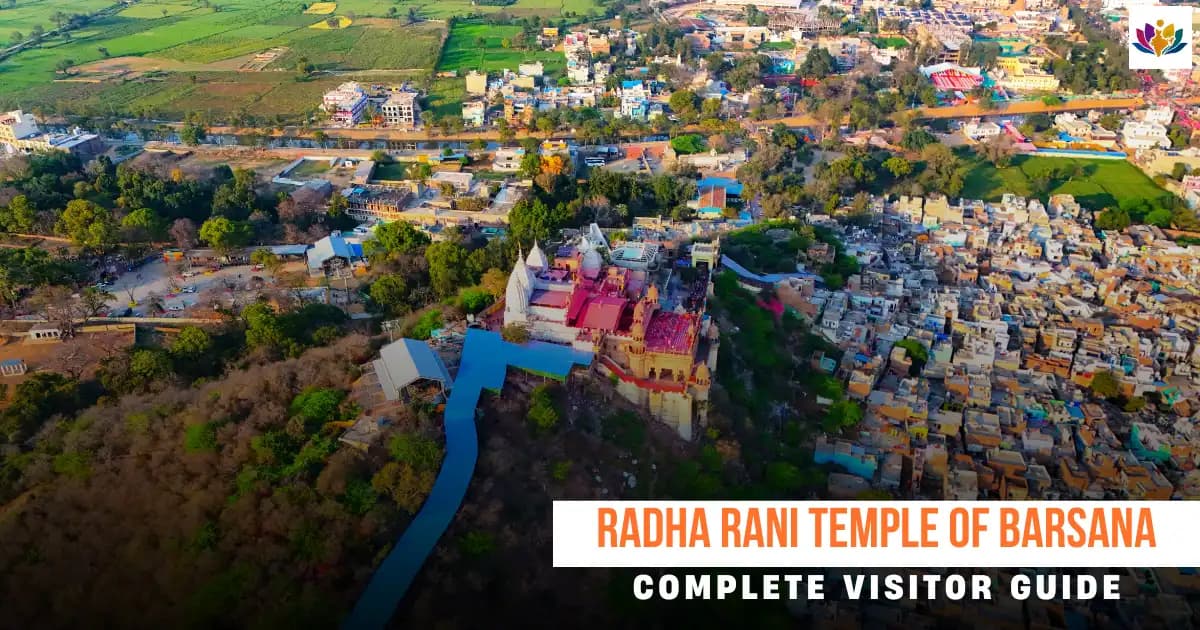
The Radha Rani of Barsana temple sits right on top of the Barsana hill, watching over the town like it has always belonged there—because, for devotees, it truly does.
People don’t just come here to “visit a temple.” They come to climb, to pause, to breathe differently, and to feel a connection that is hard to explain but easy to experience once you’re there.
Important Information at a Glance
Detail | Information |
Temple Name | Radha Rani Temple Barsana (Shri Ladli Ji Barsana) |
Location | Barsana Hills, Uttar Pradesh |
Entry Fee | Free |
Darshan Timings | 5:00 AM – 2:00 PM & 5:00 PM – 9:00 PM |
Distance from Mathura | 50–53 Km |
Famous For | Radha Rani birthplace Barsana |
Best Time to Visit | Oct–Mar + festivals like Radhashtami & Lathmar Holi |
Ideal Duration | 2–3 Hours |
The climb that changes your mood before darshan even begins
The first thing nobody really prepares you for is the climb.
It’s not extreme, but it’s honest. The steps gently rise through Barsana hill, and with every turn, you see locals selling flowers, devotees chanting softly, and travelers stopping mid-way—not because they are tired, but because the view just asks for attention.
Somewhere during this climb, the mind slows down on its own. That’s something people don’t usually mention in any Radha Rani Temple Barsana history, but you feel it immediately.
It almost feels like the place is not in a hurry to reveal itself.
A place people believe is Radha Rani’s birthplace
For many devotees, this isn’t just a temple visit. This is believed to be the Radha Rani birthplace Barsana, a place deeply connected with divine love stories of Radha and Krishna.
And whether you approach it spiritually or just as a traveler, there’s a strange consistency in what people say after visiting—“it felt peaceful in a way I didn’t expect.”
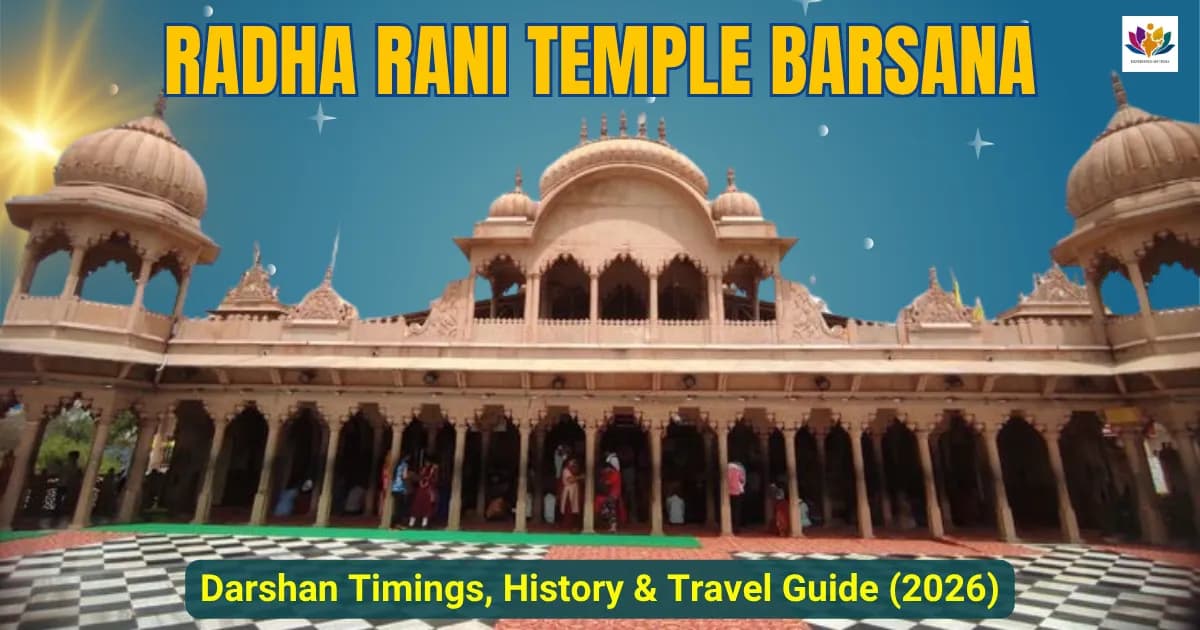
The temple structure itself stands in striking red stone, simple yet powerful. It doesn’t try to impress you loudly. Instead, it stays still, like it has seen centuries of devotion pass by.
Barsana Radha Rani darshan guide (what actually happens inside)
When you finally reach the temple entrance, things slow down again. Shoes are left behind, phones are often kept aside, and suddenly everything becomes quieter.
Darshan here is not rushed unless you are visiting during peak festivals.
Inside, the idol of Radha Rani feels deeply centered in devotion. People don’t just look; they pause longer than usual. Some whisper prayers, some just stand silently.
A simple truth about this Barsana Radha Rani darshan guide—there’s no perfect way to do it. You just let it happen.
Temple Timings (Practical but important)
Session | Timing |
Morning Darshan | 5:00 AM – 2:00 PM |
Evening Darshan | 5:00 PM – 9:00 PM |
Seasonal adjustments
Season | Morning | Evening |
Summer (Apr–Sep) | 5:00 AM – 1:30 PM | 4:30 PM – 9:00 PM |
Winter (Oct–Mar) | 5:30 AM – 1:00 PM | 4:00 PM – 8:30 PM |
Aarti Timings (when the temple truly feels alive)
Aarti | Summer Timing | Winter Timing |
Mangala Aarti | 5:00 AM | 6:00 AM |
Shringar Aarti | 7:30 AM | 8:30 AM |
Rajbhog Aarti | 1:30 PM | 1:00 PM |
Sandhya Aarti | 7:30 PM | 6:00 PM |
Shayan Aarti | 8:30 PM | 8:00 PM |
Even if you are not religious, Sandhya Aarti has a way of holding your attention. The hill echoes slightly, and the sound feels layered, almost like it is coming from everywhere at once.
Best time to visit (and what most people miss)
If you are planning a trip, timing matters more than people realize.
Months: October to March is the most comfortable for climbing and walking.
Radhashtami (Aug–Sep): Devotion peaks, but so do crowds.
Lathmar Holi (Feb–Mar): The entire Barsana transforms into color, music, and chaos in the best way possible.
But there’s a quieter detail most travelers overlook—early mornings (around 5 AM) or late evenings after 5 PM feel completely different. The crowd softens, and the temple feels more personal.
Festivals – when Barsana stops being just a town
During festivals, Barsana doesn’t feel like a destination anymore. It feels like a moving celebration.
Lathmar Holi (February–March) – The most famous celebration in Barsana
Radhashtami (August–September) – Celebrating Radha Rani’s appearance day
Janmashtami – Devotional gatherings across the hill region
During Lathmar Holi, the entire energy of the town changes. Streets fill with colors, drums echo from every corner, and visitors often say they feel like they’ve stepped into something timeless.
Nearby temples worth exploring
If you’re already climbing Barsana hill, it doesn’t stop at one temple.
Dan Bihari Temple – Quiet, less crowded, very peaceful
Maan Garh Temple – Known for its connection to Radha Krishna’s stories
Shriji Temple Exterior – Beautiful red stone carvings that catch sunlight differently throughout the day
Each of these adds a small layer to the overall experience.
Distance & Travel Details
From | Distance |
Mathura Railway Station | 50–53 Km |
Vrindavan | 40–45 Km |
Delhi | ~150 Km |
Visitor Tips (things you only learn after going there)
Entry is free, but patience is required more than anything else
Wear comfortable shoes—you will climb more than you expect
Carry water, especially in summer
Modest clothing is preferred
Morning darshan feels calmer, while evening aarti feels more emotional
The steps are safe but can get crowded during festivals
Small things like these change the experience more than people think.
How to reach Radha Rani Temple Barsana
Reaching Barsana is fairly simple, but the last stretch feels like a gradual transition from city noise to silence.
By Train: The nearest major station is Mathura Junction. From there, taxis and shared vehicles are easily available.
By Road: Well-connected from Delhi, Agra, and Vrindavan via highways.
By Air: The nearest airport is in Agra or Delhi, followed by road travel.
Once you enter Barsana town, the temple is visible from a distance on the hill itself. The final climb is either on foot or via local transport options available at the base.
Conclusion
There are temples you visit, and then there are places like Barsana that stay with you a little longer than expected.
The Radha Rani of Barsana experience isn’t about checking a destination off a list. It’s more about the quiet moments in between—the climb, the waiting, the sound of bells, and the feeling of standing somewhere people have believed in for centuries.
And maybe that’s the real reason people return again.
Not for answers… but for that strange sense of calm that doesn’t fully leave even after you descend the hill.
.webp&w=1920&q=75)