Travel Guide · Food & Culture · Updated October 2026
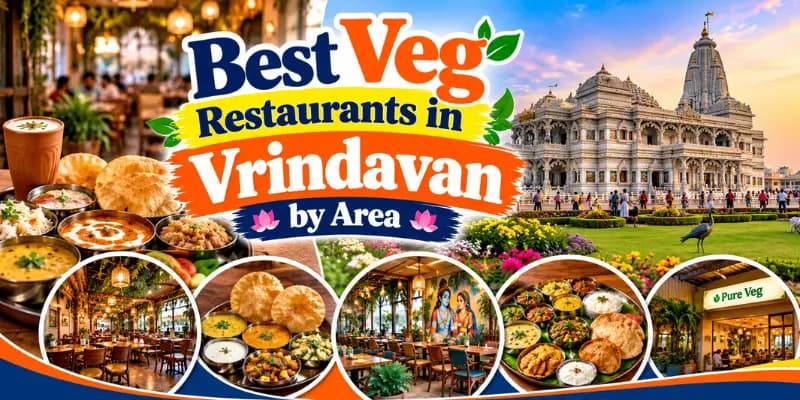
Best Veg Restaurants in Vrindavan by Area
By Gurudutt, Experience My India·23 October 2026
Quick Answer
Quick Enquiry
People worry that food without onion and garlic must be bland, I promise you it is not. Our satvik cooking, in pure ghee, is some of the most comforting food in India, and the joy of Vrindavan is that you can eat a hot, hygienic meal minutes from darshan. My simple advice: eat near wherever you are. By ISKCON and Raman Reti, go for the modern cafes; after the Prem Mandir lights, a big unlimited thali; and in the Banke Bihari lanes, do a kachori and a kulhad of lassi on the street, then cool off in an AC restaurant. Tell me your plan and I will point you to the right table. See our Mathura Vrindavan tour Packages or message WhatsApp +91 7302265809.
Raman Reti and ISKCON area: modern cafes and fine dining
This area suits international travellers, families and devotees visiting the iskcon krishna balaram mandir or the Chandrodaya Mandir, with excellent hygiene and global options alongside traditional thalis.
Ekyam Sattvic Kitchen
A peaceful, clean and highly aesthetic space specialising in 100% oil-free and maida-free satvik food, a top pick for health-conscious diners. Must-try: moong dal cheela with paneer, non-fried samosas and the curated weekday thalis.
Annakoot Restaurant
Located inside the chandrodaya mandir complex, this fine-dining spot has an incredibly calming ambience with soft devotional music and every ingredient, including paneer and ghee, is produced in-house by ISKCON. Must-try: pure-ghee South Indian dosas and the premium North Indian thalis.
11 Flowers Rooftop Cafe
A highly rated rooftop cafe, very popular with tourists and families for its breezy, comfortable atmosphere. Must-try: freshly made palak paneer, organic options and refreshing nimbu pani, all cleanly prepared without onion or garlic.
Prem Mandir and Chaitanya Vihar area: grand ambience and thalis
Conveniently near the magnificent prem mandir, this area has high-capacity restaurants built to satisfy crowds with fast service and rich, comforting meals right after the evening darshan.
Namaste Restaurant
Directly opposite Prem Mandir (a two-minute walk down a side alley), modern and well managed, serving traditional multi-cuisine vegetarian food that is consistently praised for quality and hygiene. Must-try: tandoori veg platter, Manchow soup and kadhai paneer.
Atithi Restaurant
A prime highway location right in front of Prem Mandir, with lovely traditional Indian seating and attractive interiors. Must-try: satvik chhole bhature, kanji vada and paneer butter masala.
Vrinda Thali
Famous for its unlimited Braj-style satvik thali in a casual, very hygienic setting, with lightning-fast service and servers making constant rounds to refill your plate. Must-try: the Vrinda Special Unlimited Thali.
Tripti Restaurant
Housed inside the Nidhivan Sarovar Portico, a premium, upscale option offering a buffet with excellent food safety and top-tier hospitality and exceptionally accommodating of strict Jain dietary needs. Must-try: the satvik thali buffet, fresh live-counter appetisers like golgappas and premium desserts.
Banke Bihari temple area: street food and fast bites
The lanes to the ancient banke bihari temple are tight and constantly buzzing and street vendors rule here with iconic kachoris and lassi, but a couple of established names offer a clean, air-conditioned refuge from the crowds.
Nathu’s Sweets and Restaurant
A short walk from the temple on Gandhi Road, prized in summer for its powerful air conditioning and large seating, running a partial self-service model. Must-try: chhole bhature, shahi paneer, kanji vada and the traditional sweets.
Murliwala Hotel and Restaurant
A reliable local favourite sitting between the old-town lanes and Raman Reti, serving 100% pure-ghee preparations with zero onion and garlic. Must-try: pure-ghee North Indian meals and the extensive traditional milk sweets, including Mathura peda.
The street food itself
Do not skip the lanes: hot, crispy kachoris with spicy aloo, cold kulhad lassi, jalebis and the famous Mathura pedas are an essential part of eating in Braj. Choose busy stalls with high turnover, eat it fresh and hot and enjoy.
Vrindavan food at a glance
Which area suits which kind of meal. Confirm current timings and menus locally.
Area | Best for | A few picks |
Raman Reti and ISKCON | Modern cafes, fine dining, international travellers and families | Ekyam Sattvic Kitchen, Annakoot, 11 Flowers Rooftop |
Prem Mandir and Chaitanya Vihar | Grand thalis and multi-cuisine halls after evening darshan | Namaste, Atithi, Vrinda Thali, Tripti |
Banke Bihari | Street food (kachori, lassi, peda) and clean AC sit-downs | Nathu’s, Murliwala, plus the street stalls |
A few general tips: nearly everything is satvik (no onion or garlic) and the flavour does not suffer for it; look for pure-ghee kitchens and busy, high-turnover places for the best and freshest food; and plan meals around the temple timings, use the midday closure for a long, unhurried lunch. See our vrindavan market guide for the shopping-and-snacking lanes and where to stay in vrindavan to base yourself near the food you want.
Satvik food and why Braj cooks this way
To understand eating in Vrindavan you have to understand satvik (sattvic) cooking, because it shapes almost every kitchen in town. By tradition, food offered to Krishna and then taken as prasad is prepared without onion or garlic and without meat, egg, fish or alcohol, since these are said to disturb the calm, devotional state that temple life is built around. What begins as temple offering has, over centuries, become the everyday style of the whole town, so a satvik meal here is less a special diet than the ordinary way Braj feeds itself.
The result is a cuisine that surprises first-time visitors. Without onion and garlic to lean on, Braj cooking builds flavour from pure ghee, ginger, tomatoes, asafoetida (hing), fresh coriander and a confident hand with whole and ground spices. Dishes such as kadhai paneer, chhole, dal and seasonal vegetable sabzis taste rich and complete rather than stripped down. Many kitchens take real pride in this and the better satvik places will tell you plainly that their food loses nothing for the absence of the two ingredients most Indian cooking cannot do without.
There is a devotional logic to how the food reaches you as well. In temple-linked kitchens such as those run by ISKCON, ingredients like paneer and ghee are made in-house and the cooking is treated as seva, service, rather than mere catering. For a pilgrim, eating this food is part of the darshan rather than a break from it, which is why so many visitors describe a simple Vrindavan thali as one of the most satisfying meals of their trip. Treat the food as part of the pilgrimage and not an afterthought and the town opens up at the table as much as in the temples.
Timing your meals around temple hours
Vrindavan runs on temple time and your meals will go far more smoothly if you plan around it rather than against it. Most temples close for a long midday break, roughly late morning to late afternoon, when the deities rest and reopen in the evening for the darshan and aarti that draw the biggest crowds. That rhythm is your cue: the midday closure is the perfect window for an unhurried, sit-down lunch, while the period right after evening darshan is when the thali halls near Prem Mandir fill up fastest.
A practical day might look like this. Eat a light breakfast or a simple cafe meal before or after morning darshan, when kitchens are calm and you are not competing with the crowds. Use the midday temple break for your main meal, a proper thali or a relaxed restaurant lunch, when you have time to linger and the heat is at its worst outdoors anyway. Then keep the evening lighter or save room for street food, because the lanes come alive after dark and the big restaurants get very busy once the evening aarti ends.
Timings for both temples and restaurants shift with the season and with festival days and many places keep their own hours rather than fixed ones, so confirm current timings locally before you build a tight schedule around any single kitchen. During major festivals the whole town eats late and queues everywhere are longer, so leave generous margins and do not plan your only meal of the day for the exact moment half of Braj is sitting down to do the same.
Hygiene, etiquette and practical tips
Eating well in Vrindavan is mostly about a few sensible habits. For street food, choose the busiest stalls with high turnover, where the kachoris come out of the oil hot and are eaten within minutes, rather than anything left sitting out. Carry your own water, favour freshly fried or freshly cooked items over things standing around and when in doubt step into one of the clean, air-conditioned restaurants for your main meal and keep the street for snacks. Most visitors who get this balance right eat brilliantly and never have a problem.
A little etiquette goes a long way too. Many diners here are pilgrims and the food is bound up with devotion, so it is good manners to avoid wasting food, to eat with your right hand where that is the norm and to be patient during the busy post-darshan rush when servers are moving fast. Some temple-linked and traditional places expect modest dress and a calm manner at the table; you will rarely be told so directly, but matching the quiet, respectful mood of the room is appreciated.
Finally, tell the kitchen what you need. Because almost everything is already satvik, staff are very used to dietary requests and they will usually accommodate Jain, oil-free, less-spicy or no-specific-ingredient requirements if you ask clearly when you order. Prices are generally modest, cash is still useful in the smaller places and on the street even though many restaurants now take digital payment and a genuine smile and a Radhe Radhe will almost always get you looked after. Confirm any specific prices locally, as they change.
Let us plan your Vrindavan trip, tasty bits included
Half the joy of Braj is the food and a local knows exactly which kitchen is clean, which thali is unlimited and where the best kachori is frying right now. As a Brajwasi, I can build your darshan around good, hygienic satvik meals in each area, a modern cafe by ISKCON, a big thali after the Prem Mandir lights, a street-food crawl near Banke Bihari, so you never end up hungry or stuck with a bad meal between temples. A shared day tour starts from around 1499 rupees per person or we design a private vrindavan tour package with your food preferences (Jain, oil-free, fine-dining or street) built in. Message us on WhatsApp at +91-7302265809.
Related guides
Book Your Mathura - Vrindavan Trip Today
📞 +91-7302265809
💬 WhatsApp: +91-7302265809
We Reply in 30 Minutes
Packages start from ₹1,999/ person | Rated 4.5★ / 204+ Reviews
Explore all: Mathura Vrindavan Tour Packages
Jai Shri Krishna
Meet Gurudutt — Your Mathura Vrindavan Guide
Not just a tour operator — Gurudutt was born and raised in Braj Bhoomi. He has spent over a decade personally guiding pilgrims through the sacred lanes of Mathura & Vrindavan.

Founder – Experience My India
Gurudutt
Founder · Experience My India